Brands that started with an everyday problem.
Real founders, real first collections. How parents and first-time founders turn something they lived through into a kidswear or clothing brand, and what it takes to design, sample and manufacture it in India.
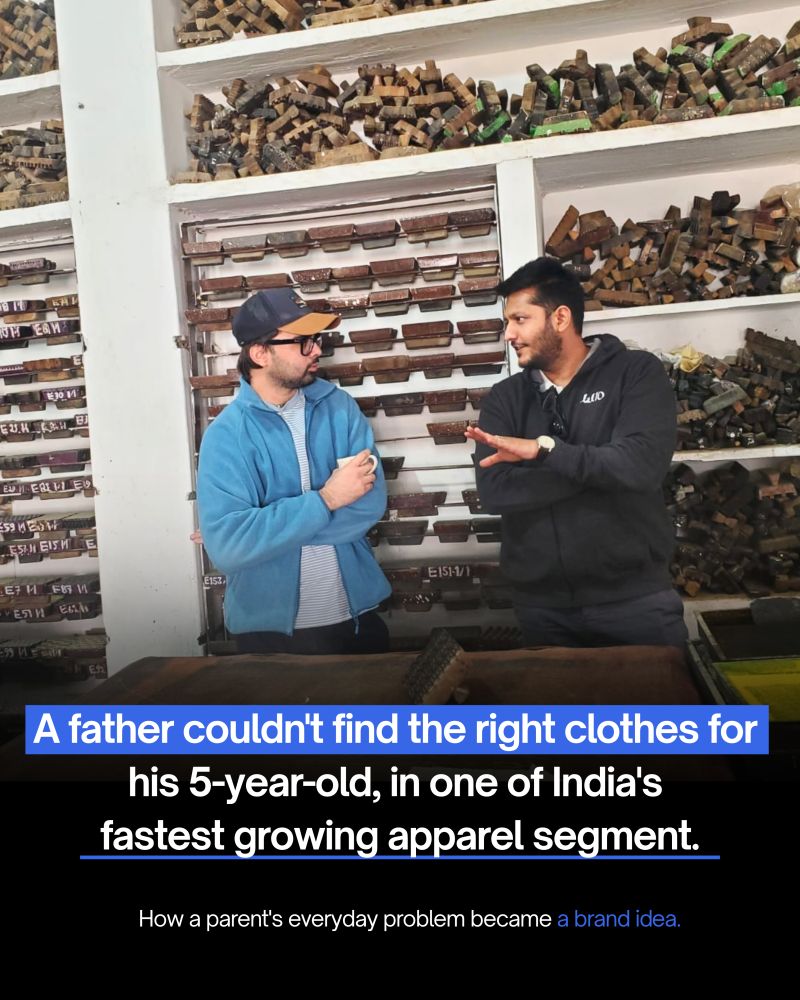
How to start a kidswear brand in India
Kids clothing is one of India’s fastest-growing apparel segments, and one of the hardest to get right. These are the six things every new kids clothing brand has to plan before its first collection.
Size by age, not by S–M–L
Kids clothing is sized by age band: newborn and baby (0–3M, 3–6M, 6–12M, 12–24M), toddler (2–4Y) and kids (4–12Y). Pick one band for your first collection and grade 4–6 sizes inside it, rather than covering every age at once.
Fabrics that are kind to skin
Most kidswear starts with soft, breathable cotton: single jersey and interlock knits for tees, rompers and nightwear; muslin and cotton voile for babywear and summer dresses; GOTS-certified organic cotton for premium baby clothing.
Child safety is non-negotiable
Use azo-free, low-impact dyes, nickel-free snaps and trims, and buttons that pass pull tests. Avoid cords and drawstrings at the neck of young children’s tops. For export, follow EN 14682 (UK/EU) and CPSIA (US); OEKO-TEX Standard 100 is the common fabric-safety certificate buyers ask for.
Low MOQ, so sizes don’t eat your cash
Every size multiplies SKUs and stock. Lal10 Brand Launchpad runs first productions from about 50–100 pieces per style, so a new kids brand can test a focused range before tying up working capital in deep inventory.
Made in India’s kidswear clusters
Tiruppur is India’s knitwear hub for kids t-shirts, joggers, rompers and nightwear; Noida and Delhi-NCR handle woven kids dresses, shirts and ethnic wear; Jaipur and Bagru specialise in hand block-printed kids clothing.
Labels, care and packaging
Kids garments need clear size-by-age labels, fibre content, care instructions and, for export, the market’s labelling rules. Soft printed or heat-transfer labels avoid the itch of stiff woven tags on young skin.
Kids clothing categories we manufacture
From newborn babywear to tween fashion, these are the kidswear categories founders most often launch with.
- Baby rompers & onesies
- Newborn and infant sets
- Muslin swaddles & baby jhablas
- Toddler co-ord sets
- Kids t-shirts & joggers
- Kids nightwear & pyjamas
- Girls’ dresses & frocks
- Boys’ shirts & shorts
- Kids ethnic wear & kurtas
- Block-printed kids clothing
- Organic cotton babywear
- Kids sweatshirts & hoodies
Kidswear questions founders ask us
How do I start a kidswear brand in India?
Start from a clear problem and customer (for example, comfortable everyday wear for 2–6 year olds), choose one age band and 6–10 styles, build tech packs, approve samples for fit and safety, then produce a small first run. Lal10 Brand Launchpad supports each step from design to a 50–100 piece first production run per style.
How much does it cost to start a kids clothing brand?
Manufacturing cost for basic kidswear made in India typically ranges from about ₹260 to ₹710 per piece (roughly $3.20–$8.50) depending on fabric, print and trims. A first collection of 6–10 styles at low MOQ keeps total inventory spend manageable; sampling, branding, packaging and marketing are added on top.
What fabric is best for kids clothes?
Soft, breathable cotton is the default: cotton jersey or interlock for tees, rompers and nightwear, muslin for babywear, and GOTS-certified organic cotton for premium baby clothing. Avoid scratchy trims and stiff woven labels near the skin.
What safety standards apply to children’s clothing?
Key checks are non-toxic, azo-free dyes, nickel-free trims, securely attached buttons and snaps, and no neck cords or drawstrings on young children’s garments. Export markets add their own rules: EN 14682 for cords and drawstrings in the UK and EU, and CPSIA (lead, phthalates and tracking labels) in the US.
What is the minimum order quantity for kidswear manufacturing in India?
Traditional export factories often ask for 500–1,000 pieces per style. With Lal10 Brand Launchpad, first production runs for kidswear start at about 50–100 pieces per style.
Which kids clothing categories are easiest to launch with?
Everyday cotton basics such as kids t-shirts, joggers, rompers, co-ord sets and nightwear are the simplest to launch, because fabrics are easy to source and sizing is forgiving. Occasion wear and kids ethnic wear sell at higher prices but need more design and trims work.